




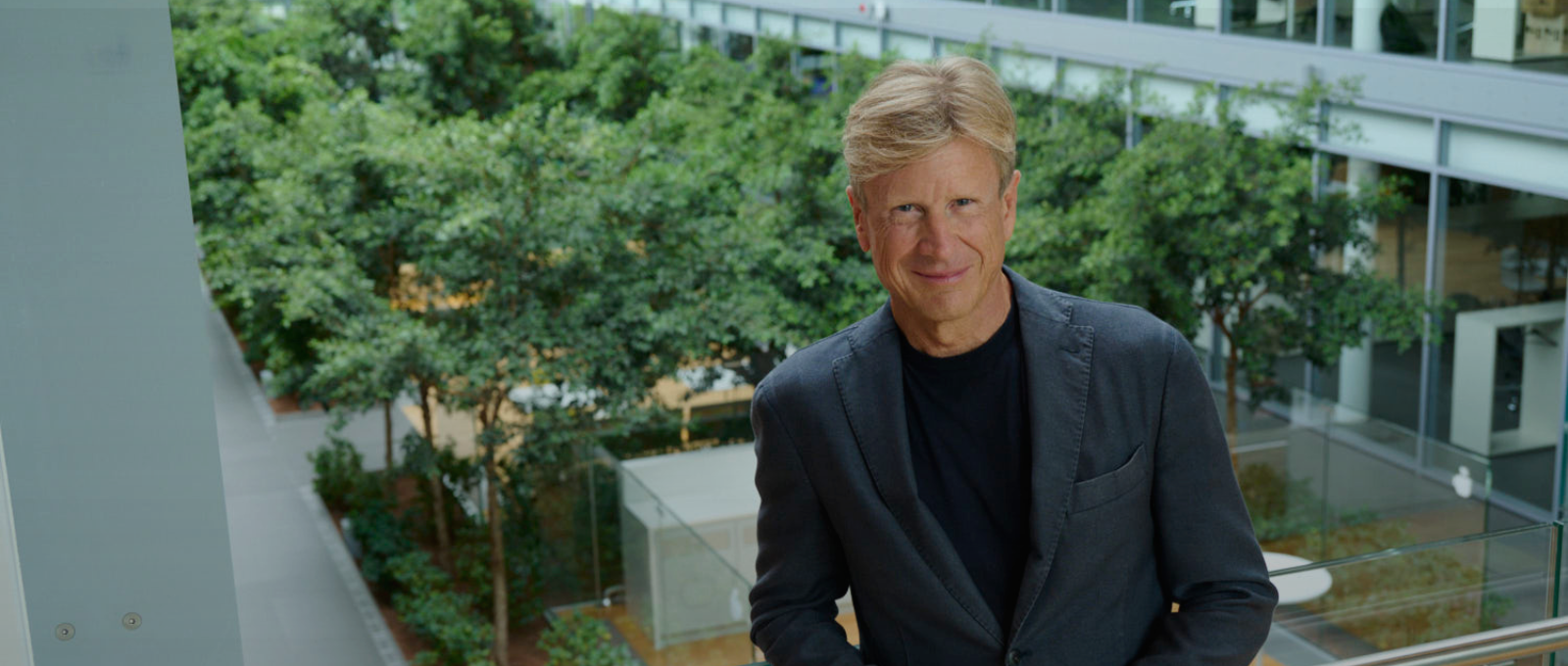
Massimo Battaini, CEO of Prysmian, took office on 22 May 2024. In two years he has managed to triple the share price of the world’s largest manufacturer of electrical and telecommunications cables. The company has a presence in 50 countries and employs 34,000 people. The firm has just strengthened its position in Spain.
Spain’s interconnections with Ireland and Italy are viable in terms of length and depth
Prysmian has just closed the acquisition of ACSM in Vigo. Is this a one-off bet, or do you plan to keep growing through purchases in Spain?
ACSM has a very unique history. It was founded by a former captain who worked for Telefónica laying submarine cables. When Telefónica exited that business, he started from scratch and built a company that today has more than 650 employees and three ships. They had historically already been working on Prysmian projects, and we decided to integrate their operations into our group.
Their technical know-how is extraordinary. For example, they took part in the inspection of the fishing vessel Villa de Pitanxo. Their ships maintain dynamic positioning at sea and deploy underwater robots capable of operating at thousands of meters of depth. That same expertise is what they apply to our submarine cable laying and maintenance operations.
And yes, within our inorganic growth objectives we continue to analyse opportunities. There are more potential targets in Spain. We are looking for technical capabilities, engineering and operations that fit our portfolio.
What opportunities do you currently see in the Spanish market?
We do not necessarily need to reinforce our industrial capacity any further. With our current assets we can serve a large part of the growth in electrification, grids and digital solutions.
Where we do see a very clear opportunity is in electrical transmission. The April 2025 blackout made evident the need to strengthen Spain’s interconnections with the rest of Europe. That opens a great opportunity for us in the transmission business.
Spain has done an extraordinary job on renewables. More than 60% of electricity generation already comes from green technologies such as solar, wind and hydro. It is probably the most advanced European country. But to complement that high renewable penetration, more interconnections are needed.
Spain already benefits from relatively low electricity costs thanks to renewables. It now needs more connection with neighbouring countries to better take advantage of those price differences and to reinforce supply security when renewable intermittency does not match demand.
Spain and Ireland have agreed to study a new submarine interconnection. There is also talk of another possible connection with Italy. Are these viable projects?
Anything is possible. Behind both projects there are technical analyses and Prysmian is involved in them, which is why we can confirm their viability.
We have industrial capacity in France, Finland and Italy to manufacture large volumes of cable — something essential for long-distance interconnections. In addition, we have first-class technological and innovation capacity.
We have just launched a 525 kV cable capable of carrying 20% more power than the current standards. That makes it possible to transmit more energy at the same cable cost, which greatly improves the profitability of interconnections for system operators.
In addition, one must not forget installation capacity. Prysmian has a fleet of eleven cable-laying vessels. We also hold the world record for distance in submarine interconnections. Therefore, neither the length nor the marine depth represent a technical problem in the Spain–Ireland or Spain–Italy projects.
What strategic sense does the project between Spain and Ireland have?
It makes a great deal of sense because it connects three areas where we are particularly strong: renewable generation in Spain, data centres in Ireland and electrical interconnection between the two countries.
In addition, we have invested heavily over the last few years to reinforce our presence in data centres. We have expanded industrial capacity both in the United States and in Europe for medium-voltage cables and electrical grids, and also for optical cables and digital solutions.
Inside a data centre there are enormous amounts of cabling to connect racks and servers. We are close to signing long-term supply agreements with large hyperscalers to provide those optical cables.
How is geopolitical fragmentation affecting Prysmian?
Obviously, geopolitical tensions are negative because they bring conflicts and wars. But from an industrial point of view, they are accelerating opportunities.
Energy independence implies local generation and also local production of infrastructure. We have been investing for years precisely in order to manufacture close to our customers in all the regions where we operate. Geopolitical tensions increase demand for interconnections, renewables and grids. And every new renewable installation generates demand for the entire cable value chain: high-voltage transmission, distribution, building electrification and telecommunications. We are also seeing a strong push in the digital business. We are practically the only major player that combines electrical and optical cables, and that places us in a very strong position to benefit from the growth of data centres and digitalisation.
You have shown some disappointment with European industrial policy. What exactly are you demanding?
We are disappointed because grid solutions, including cables, initially appeared among the strategic technologies protected by Europe, and in the end were left out. We have thousands of workers in Spain and in Europe. We generate industrial employment and we are world leaders, but we are not considered strategic technology. What we are asking for is a level playing field. We invest in Europe, but we need permits, environmental licences and lengthy regulatory processes. Meanwhile, we compete with companies backed by states that receive public aid and build factories immediately.
We are not asking for privileges. We are asking for a level playing field.
Key quotes
Industry law
“We are not asking for privileges. We are asking for a level playing field.”
Diversity
“We are the only player that combines electrical and optical cables, which makes us stronger.”
Growth
“There are more potential targets in Spain. We are looking for technical capabilities.”