




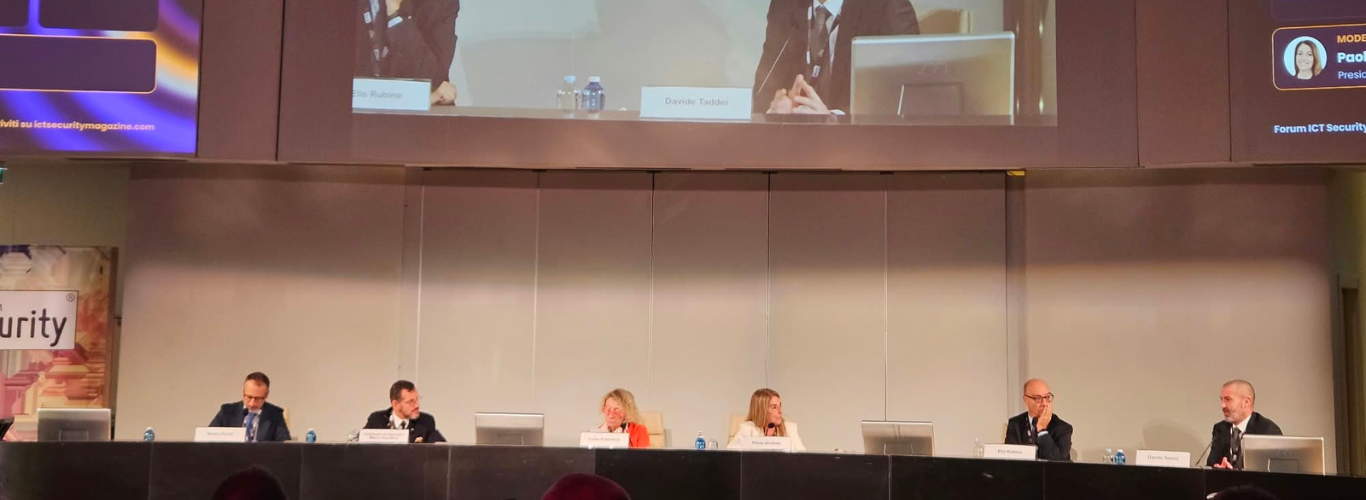
Prysmian is taking part today in Forum ICT Security 2026, an event addressing the emerging security challenges facing digital infrastructure and bringing together CISOs, executives and policymakers in Rome to discuss cybersecurity, resilience and business continuity. Davide Taddei, Prysmian’s Submarine Telecom Business Director, is joining the roundtable“Mediterranean Cyber: Submarine Cables, Port Hubs, Kinetic Spillover”, focused on the protection of critical infrastructure across the Mediterranean.
Taddei: “Infrastructure protection and monitoring must be considered from the earliest design stages. Security comes into play as early as the route planning phase and extends throughout the infrastructure’s entire lifecycle, from cable design and installation to ongoing monitoring. These assets are designed to operate for 30 to 40 years, which is why appropriate mechanical protection measures, such as cable armouring and adequate burial depth, must be combined with monitoring and sensing technologies that provide insights into the condition and security of the infrastructure.”
Taddei: “Prevention must go hand in hand with the ability to respond quickly, minimising downtime. In the Mediterranean, mechanisms and capabilities are already in place to enable the rapid repair of cables, an essential element in strengthening the overall resilience of the network. At the same time, we cannot look at these infrastructures as standalone assets: they need to be considered as part of an interconnected system. Damage to a single link does not only affect the infrastructure operator, but can have broader consequences for the system it supports. We therefore need a comprehensive approach to resilience that brings together design, protection, monitoring and response capabilities.”
Taddei: “We need to distinguish between operational and strategic resilience. Operational resilience is directly relevant to operators, as ensuring infrastructure continuity means ensuring that the asset remains operational. Strategic resilience, on the other hand, concerns the country as a whole and necessarily requires the involvement of public authorities. While the client and asset operator are responsible for the design and construction of the infrastructure, the security and resilience of the wider system require structured coordination between the private sector and public institutions.”
Taddei continued: “This is precisely the kind of coordination that needs to be strengthened, including to establish from the outset how the necessary investments should be allocated. Minimising infrastructure downtime requires not only continuous monitoring, with the support of the relevant authorities, but also a lifecycle approach to asset management. Understanding the condition of the infrastructure and planning maintenance or replacement well in advance are integral to ensuring its long-term resilience.”