


Prysmian receives notice to proceed for Greek island interconnector projects worth up to €910 million
- Seven projects will connect the Dodecanese and North Aegean islands to Greece’s national grid, improving reliability and strengthening energy security
- The links will allow electricity to flow in both directions, so the islands can export renewable power to Greece’s national grid and draw electricity from it when needed
- Installation at depths exceeding 1,150 meters is expected to set a world record for static three-core 150 kV HVAC cables
Prysmian has received a notice to proceed from Greece’s Independent Power Transmission Operator (IPTO) for seven projects to connect the Dodecanese and North Aegean islands to the national electricity grid. The projects are worth up to €910 million, as set out in the framework agreement awarded in June 2026. With the notice to proceed, the projects will now be added to Prysmian’s backlog.
The interconnectors will help the islands phase out reliance on costly diesel- and oil-fired power generation, reducing carbon emissions. By connecting individual islands to the national grid, the links will also make it easier to integrate locally generated solar and wind power and share it across Greece. The islands will be able to draw electricity from the wider grid when local generation is insufficient, strengthening the security and resilience of their power supply.
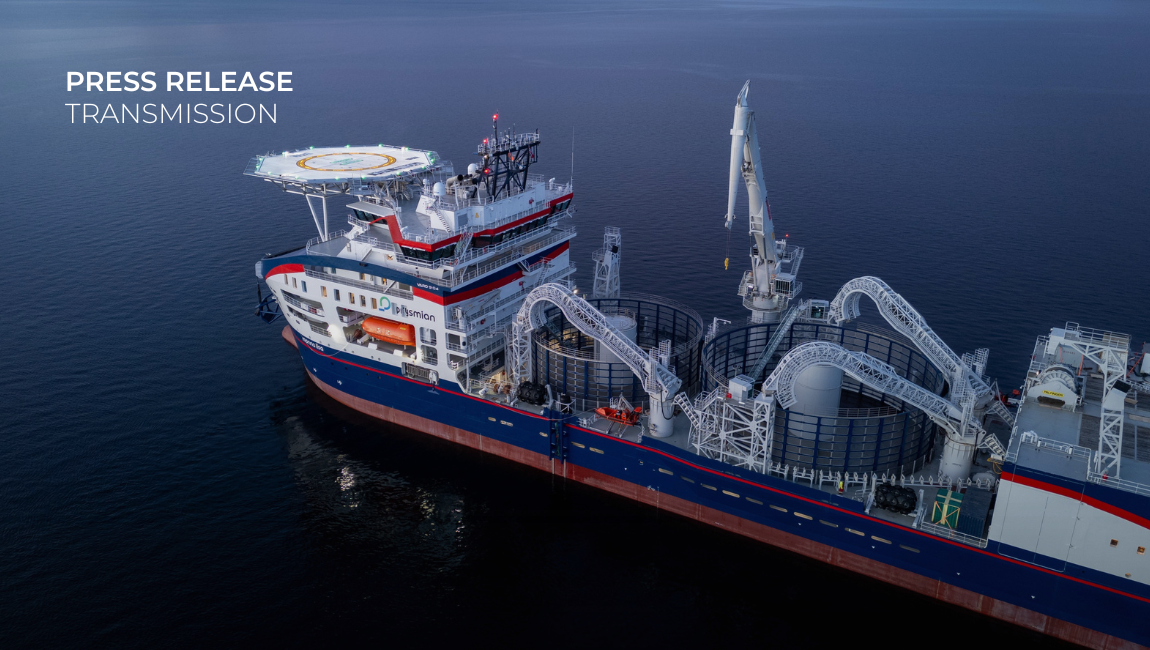
Prysmian will design, manufacture and install more than 900 km of high-voltage alternating current (HVAC) cables for offshore and onshore connections. Final delivery is expected in 2033. Installation is expected to reach depths exceeding 1,150 meters, setting a world record for static three-core 150 kV HVAC cables.
Raul Gil, EVP Transmission at Prysmian: “These interconnectors will make a real difference to daily life on the islands. Residents, local businesses and visitors will benefit from a more reliable electricity supply. We expect to set a new world record for HVAC installation, and we can take on that challenge because we have the cable technology, the installation vessels and the people who know how to do it. Greece is showing what it takes to turn investment in renewable energy into greater energy security. If Europe wants to rely less on imported fossil fuels and make better use of the wind and solar power it can generate at home, it needs to build the grids that can carry that power to where it’s needed. This is an important step forward for Greek and European energy security.”
MEDIA & INVESTOR RELATIONS

Maria Cristina Bifulco
Chief Strategy, IR, M&A and Communication Officer
- phone-
- email[email protected]
media relations

Jonathan Heywood
Communication, Public Affairs & Media Relations Director
- phone+39.331.6573546
- email[email protected]